
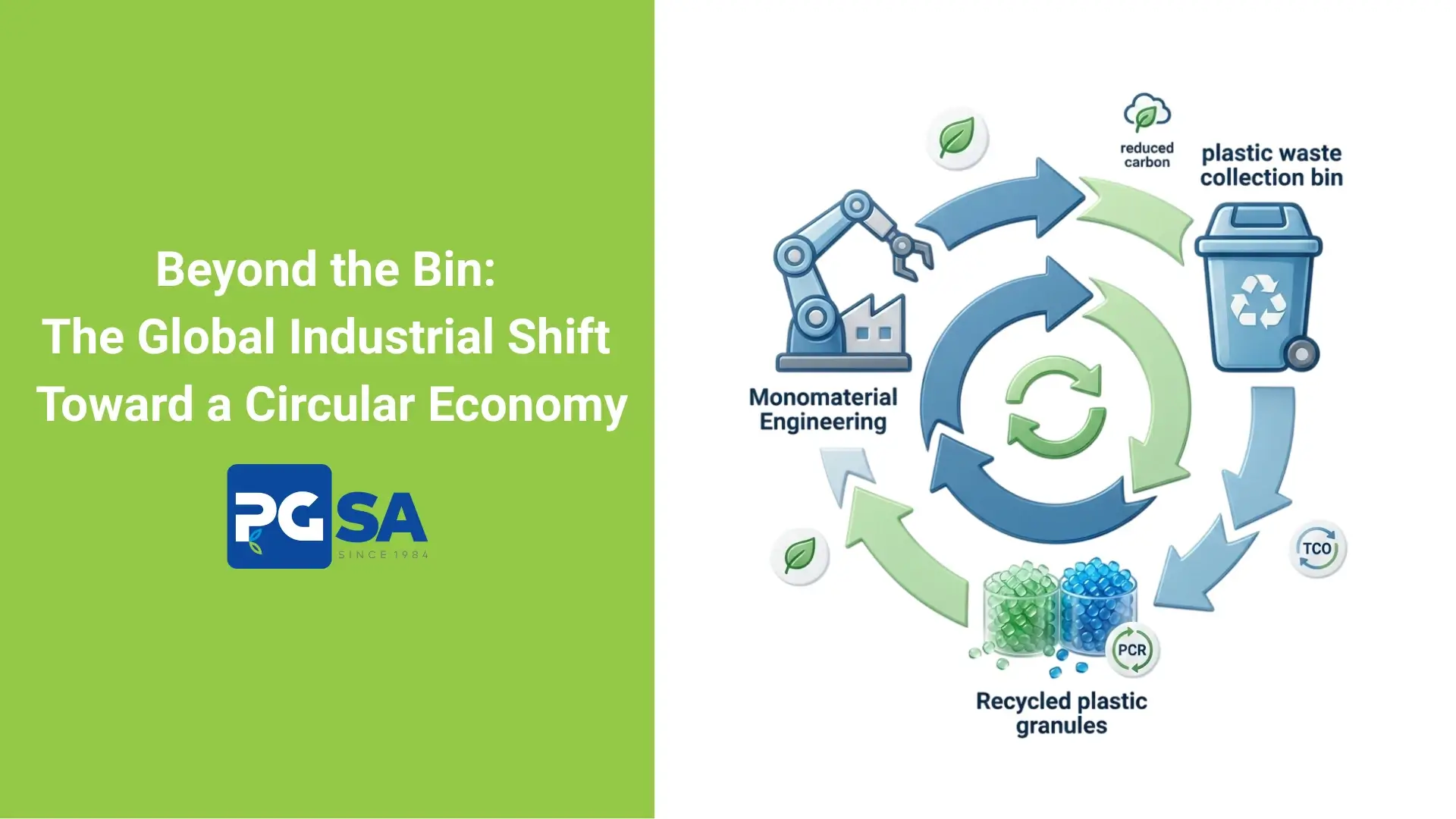
For decades, the global industry followed a "Take-Make-Waste" model. Raw materials were extracted, turned into products, used briefly, and then discarded. But in 2026, the landscape has changed. Scarcity of virgin resins, volatile energy costs, and a global demand for sustainability have made the old way of doing business obsolete.
At Plasticos Generales, we are no longer just manufacturers; we are architects of a Circular Economy. This isn’t just a "green" initiative—it is a fundamental shift in how we engineer plastic to ensure it remains a valuable resource forever.
The Power of One: The Mono-Material Revolution
The biggest obstacle to recycling has historically been complexity. Multi-layer plastics (mixing foil, paper, and different resins) are nearly impossible to separate, often ending up in landfills despite being "recyclable" on paper.
In 2026, Plasticos Generales is championing Mono-Material Engineering:
- What it is: Designing packaging using a single type of high-grade polymer (like 100% LDPE or HDPE).
- The Global Impact: Because these products aren't "contaminated" by other materials, they are 100% compatible with standard recycling streams anywhere in the world. We are stripping away the complexity to make recycling seamless and profitable for our partners.
High-Performance PCR: Recycled, Not Downgraded
There is a common myth that recycled plastic is "weaker." Our 2026 production lines prove otherwise. By integrating Post-Consumer Resin (PCR) (materials recovered from the global waste stream) we are producing industrial-grade components that rival virgin plastic in durability and clarity.
- Carbon Savings: Utilizing PCR instead of virgin resin can reduce a product’s carbon footprint by up to 70%.
- Resource Security: As global oil prices fluctuate, our reliance on recycled feedstocks provides price stability and supply chain resilience for our clients.
The Business Case: Circularity as a Productivity Lever
Switching to a circular model is no longer just about compliance; it's about Return on Investment (ROI).
- Lower Total Cost of Ownership (TCO): Circular products are designed for longevity and reuse. A durable, returnable plastic pallet or container replaces thousands of single-use alternatives over its lifespan.
- Global Market Access: In 2026, major global markets (from the EU to North America) are requiring documented "Digital Product Passports." By using our circular solutions, your business is automatically aligned with international transparency standards.
Quick Stats: Circularity in 2026
- $517 Billion: The estimated global market value of the circular economy this year.
- 11.4%: The annual growth rate of the recycled polymer market as industries move away from virgin plastic.
- 1.3kg: The amount of CO2 (Carbon Dioxide equivalent) avoided for every kilogram of recycled HDPE used instead of virgin material.
The PGSA Vision
We don't see plastic waste; we see the raw material of the future. By closing the loop, we are helping our global partners transform their environmental "footprint" into a "blueprint" for sustainable growth.
Is your supply chain ready for the circular transition?
 EN
EN  ES
ES